Checkmate (2026)

Jun. 14th, 2026 07:58 am
reviews_and_ramblings: (Default)
[personal profile] reviews_and_ramblings
Adapting a highly intense, deeply psychological, and explicit BL manhwa like Checkmate into a short-form vertical drama on an app like Lezhin Snack was always going to be an uphill battle, and I want to highlight exactly where those structural limitations damaged the story. 
It is incredibly frustrating when actors have fantastic, palpable chemistry—as Chun Woo Jin (Su Hyeon) and Lee Sungshin (Eunsung) do—only for the production to throw icy water on it.
The immediate cuts to black and jarring camera angle shifts during kisses are a direct byproduct of the micro-short vertical format. These series are built for hyper-fast scrolling on phones (often 1-to-2-minute episodes). Production companies frequently sanitize the physical intimacy to secure broader, all-ages app store distribution or because their budget and shooting schedule simply don't allow for the careful choreography that a natural, mature intimacy scene requires. It completely undersells the intense, toxic, and magnetic relationship that defines Tan’s original manhwa.
A point about a scene with the art teacher scene is a textbook example of lazy adaptation cutting.
Original Manhwa: The teacher explicitly violates Su Hyeon by performing an intrusive physical check. Su Hyeon's retaliatory dialogue about being the "top" makes perfect, albeit dark, contextual sense.
Vertical Drama: The teacher loosely pulls down a tie to check for a neck hickey. The dialogue is kept exactly the same, creating a massive plot hole. A neck hickey tells you absolutely nothing about someone's position in a relationship. By watering down the teacher’s harassment to make it "palatable" for a quick short-form scene, but lazily keeping the iconic script line, the writers created a bizarre logical leap. If you censor the action, you have to rewrite the dialogue, otherwise, you break the audience's immersion.
Removing Eunsung’s best friend (who doubled as Su Hyeon's classmate) is a massive blow to the narrative structure. In a long-form story, that character serves as the literal anchor to their high school days—the person who actually validates how deeply rooted their obsession and rivalry truly is.
Because vertical dramas are heavily condensed (the entire series of Checkmate clocks in at only around 94 total minutes), side characters are almost always the first to be thrown overboard. Unfortunately, removing him flattens the world, making Su Hyeon and Eunsung feel like they exist in a vacuum rather than having a complex, shared history.
It’s a shame because the technical production and the actors themselves did a surprisingly great job adapting to the vertical framing. It just proves that no matter how good the actors are, they can't entirely fix a script that has been chopped to pieces to fit into a phone screen format.
HEA. You can watch on Lezhin Snack. Heat Level: 2/6 (2 on 6 for heat level for an adaptation of Checkmate is ridicolous!)


(no subject)

Jun. 13th, 2026 10:16 pm
flemmings: (Default)
[personal profile] flemmings
Another hot blowy day. Played clothesline bingo, got several tanktops and sleep bottoms out to dry/ bleach in the hot hot sun, and lost a tanktop and a shirt to the birds, not the cherries. The cherries themselves are beginning to both ripen and fall so that's it for clotheslines until maybe a month from now.  Underwear of course is hanging from the living room chandelier and drying in the living room fan.

It felt hotter than yesterday, which is probably the difference between going outside at noon like today, and 4 pm like yesterday. But what I wanted was a Johnson cocktail-- that's gin, dry vermouth and sweet vermouth-- and I didn't want to go out to buy the fixings. So I put in an order with UberEats and all was tickety-boo until the very end when they wanted me to take a photo of my ID, take a photo of myself, and upload both. Previously it's been the delivery guy who photo'd my ID and in each case had extreme difficulty in so doing, so I was pretty sure I wouldn't manage it either. So hell, let's try SkipTheDishes, even if I keep having to correct my address with them. They said the Dupont LCBO has gin and sweet vermouth but no dry; the Bathurst outlet has gin and dry vermouth but no sweet. Uber said they could get both. Yeah, and both Skip and Uber's interface lagged like a lagging  thing. The hell with it, I said, and closed the browser. Johnson cocktail erases the owies better than anything but my system really hates it,  a fact I tried to ignore.

SNDs were out back gardening. He-SND was hacking away at the great overgrown clump of vines on the fence between our yards, with a battery operated trimmer and a manual hacksaw. And even with both those and a male's upper body strength was finding it hard going, so thick are the stems now. I have a bigger trimmer that might work but I've never used it in the seven years I've had it and discover that it needs some assembly. Also an outlet and extension cord, of course.

But tomorrow will be rain all day so no gardening happening. I slept with just the fan last night but am not sure that will work tonight: and I did keep waking up sweating. A modest hydro bill came in last week and I overpaid 300% so maybe I can afford the luxury of a window AC, especially since next week is forecast to be window fan cool at night.

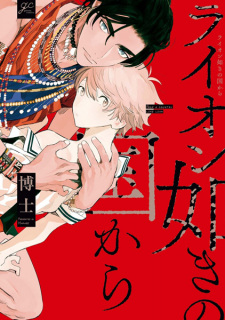
From a Country Like Lion by Hakase

Jun. 13th, 2026 04:40 pm
reviews_and_ramblings: (Default)
[personal profile] reviews_and_ramblings
 

A boy-meets-boy story about an imaginative boy who loves animals and a Maasain exchange student in Japan!

My Rate: 8

From a Country Like Lion (Raion Gotoki no Kuni kara) by Hakase is exactly the kind of manga that catches you off guard. On paper, it sounds like a sweet, educational fish-out-of-water slice of life. In reality, it drops a massive dose of spicy, explicit romance into what is otherwise an incredibly wholesome, cross-cultural relationship.
The story follows Makoto, a pint-sized, imaginative high schooler who absolutely adores animals. When his family agrees to host a Maasai exchange student from Kenya, Makoto’s active imagination goes into overdrive. He expects a wild, traditional warrior to step off the plane; instead, he meets Luca, a tall, effortlessly handsome, modern, and highly social young man.
The initial dynamic is built on a fun subversion of cultural stereotypes. Luca isn't a walking caricature—he is just a regular, fun-loving guy who happens to be from Nairobi, trying to navigate life in Tokyo.
If you love extreme height and build differences in your BL, Hakase delivers. Luca is drawn with a long, beautiful, athletic frame, while Makoto is tiny and delicate. Their physical contrast visually anchors the "lion and smaller animal" motif Makoto keeps playing in his head.
Hakase is fantastic at drawing physical intimacy. Beyond the explicit scenes, the way the boys hold hands, entwine their limbs, and lean into each other's space feels incredibly tender. You genuinely believe that they are crazy about each other.
Amidst the romance, the manga doesn't shy away from heavier realities. It briefly touches upon the legal and social realities of being queer in Kenya versus Japan, giving their relationship a grounded, meaningful layer of emotional stakes.
The romance moves at breakneck speed. They clear the "mistaken identity" hurdle (Luca initially thinks Makoto is a girl) and dive straight into confessions and intimacy by the very first chapter. If you prefer a slow-burn romance where characters build tension over time, this fast-track pacing might feel jarring.
A common critique among readers is how young Makoto is drawn. While he is explicitly a high school student, his character design leans heavily into the "hyper-petite/childlike" trope often found in classic BL. Depending on your personal tastes, this design choice can feel a bit uncomfortable given how explicit the book gets.
Do not let the "wholesome animal-lover" premise fool you. This manga is highly explicit (R-rated/smut). The bonus chapters and extras push the boundaries even further, so make sure you're looking for an adult read before opening it.
From a Country Like Lion is a short, sweet, and incredibly high-heat read. It uses a unique multicultural premise to deliver a fast-paced romance that balances genuine tenderness with intense explicit passion. If you can overlook the rapid pacing and the classic "tiny uke" art style, it’s a uniquely heartwarming addition to your BL shelf.

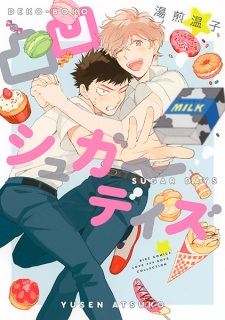
Dekoboko Sugar Days by Atsuko Yusen

Jun. 13th, 2026 04:31 pm
reviews_and_ramblings: (Default)
[personal profile] reviews_and_ramblings
 

When they were little kids, Yuujirou Matsukaze rescued the poor Rui Hanamine from an unlucky incident. It was love at first sight for Yuujirou, and from that moment on, he knew that he had to protect Rui at all costs.

Now in high school, Rui stands tall at 186 centimeters and is strongly attached to Yuujirou, who is conscious of his height of only 165 centimeters. Despite knowing each other for so long, Rui remains oblivious to Yuujirou's feelings, and Yuujirou cannot bring himself to express his emotions. But as they grow more aware of what they feel deep inside, the harder it gets to contain their sweet sentiments for each other.

My Rate: 8 (amzn.to/4e7eGK7)

Dekoboko Sugar Days by Atsuko Yusen is an absolute gem of a BL manga that perfectly captures the "childhood friends to lovers" trope with an incredibly charming, literal twist. The title itself gives away the dynamic: Dekoboko means uneven or mismatched, referring to the hilarious and adorable height difference between our two leads.
The core charm of the manga lies in the flipped expectations of the childhood dynamic.
Yuujirou (the darker-haired, shorter lead at 165 cm) spent his childhood acting as the fierce protector of the fragile, crybaby Rui. He still holds onto that protective instinct, even though he now has to look significantly upward to make eye contact.
Rui (the giant, gentle 186 cm puppy) has grown physically massive but remains emotionally soft, completely attached to Yuujirou like a giant, clingy golden retriever.
Watching Yuujirou grapple with his wounded pride over his height while simultaneously dealing with a massive, unrequited crush is both deeply funny and incredibly endearing.
True to its name, the story is incredibly sweet. Atsuko Yusen avoids heavy, toxic drama or unnecessary misunderstandings. Instead, the conflict stems from internal tension: Yuujirou is terrified that confessing will ruin their deep-rooted friendship, while Rui is slowly waking up to the reality that his "attachment" to Yuujirou isn't just platonic comfort—it's genuine, deep romantic love.
Because they already share complete trust, the transition from friends to realizing their feelings feels organic, gentle, and earned.
Yusen's artwork elevates the story significantly. The character designs beautifully emphasize their physical differences without making the proportions look awkward. Rui's expressions are bright, soft, and expressive, while Yuujirou's tsundere (prickly on the outside, soft on the inside) nature is perfectly captured through his flustered, blushing, and slightly defensive grimaces. The background art and panels have a light, airy quality that matches the fluffy tone of the narrative.
Dekoboko Sugar Days is a masterclass in feel-good BL. It takes familiar tropes—childhood friends, height differences, and hidden crushes—and executes them with perfect comedic timing and high emotional sincerity. It’s a quick, comforting read that will leave you smiling from ear to ear.
If you end up loving this volume, the story actually continues in a sequel volume titled "Dekoboko Sugar Days: Once More!" which follows their lives as an official couple navigating college life together.
reviews_and_ramblings: (Default)
[personal profile] reviews_and_ramblings
 

Samejima-kun and Sasahara-kun are best friends. They go to same school, they're in the same year, and they even work at the same place. There's absolutely nothing wrong with that... except, when Samejima-kun confesses his feelings, "I think I like you, man...", Sasaharakun-replies "Eeww.." And you would think things get a little awkward between the two, but their relationship turns into a comedic explosion! It's enough to drive a man crazy, in more way than one!

My Rate: 8 (amzn.to/4vQyMOM)

If you are tired of the overly dramatic, angsty "will-they-won't-they" tropes in BL manga, Koshino’s Samejima-kun and Sasahara-kun is the perfect, chaotic antidote. It takes a premise that usually leads to heartbreaking rejection and immediately turns it into a high-energy, laugh-out-loud comedy.
Most BL stories treat a "friend-zone" rejection with heavy tears and sudden distance. Koshino throws that playbook out the window.
Samejima and Sasahara share everything—school, year, and a part-time job.
Samejima drops a genuine, vulnerable confession ("I think I like you, man..."), only for Sasahara to hit him with an immediate, unfiltered "Eeww."
Instead of destroying their friendship, this brutal honesty shatters the tension and kicks off a hilarious, boundary-pushing dynamic. Sasahara doesn't hate Samejima; he just genuinely finds the idea of his goofy best friend liking him romantically to be absurd.
The absolute selling point of this manga is the sheer chemistry between the leads. They don't act like a traditional, delicate romance couple; they act like real, chaotic best friends who have no boundaries.
Samejima (The Confessor): Surprisingly earnest, slightly pathetic in a lovable way, and utterly persistent. Eager Golden Retriever.
Sasahara (The Rejector): Blunt, easily annoyed, deadpan, but ultimately incredibly indulgent of Samejima's nonsense. Grumpy Cat.
The comedy thrives on the "explosion" of their daily lives. Samejima doesn't back down just because he got an "eeww," and Sasahara doesn't know how to properly distance himself because they are stuck together 24/7. It creates a hilarious tug-of-war where affection is wrapped in insults and aggressive banter.
Koshino’s art style perfectly matches the comedic tone. It’s expressive, highly dynamic, and doesn't shy away from ridiculous, exaggerated facial expressions. When Sasahara is disgusted, you feel it; when Samejima is pouting, it’s peak comedy. The pacing is fast, the gags hit rapidly, and the transition from platonic idiocy to genuine, underlying romantic tension is handled with surprising skill.
Read it if you love: The friends-to-lovers trope executed with heavy comedy. Unfiltered, blunt, and chaotic character dynamics. A quick, lighthearted read that will actually make you laugh out loud. If you prefer Slow-burn, highly emotional, or deeply poetic romances and Characters who are polite and gentle with each other's feelings this is not for you.
Samejima-kun and Sasahara-kun is a refreshing, loud, and incredibly fun take on a classic BL setup. It proves that sometimes, the best way to a man's heart isn't through a dramatic declaration under the cherry blossoms, but through a series of ridiculous arguments, shared shifts at work, and a healthy dose of mutual teasing.
reviews_and_ramblings: (Default)
[personal profile] reviews_and_ramblings
 

"I don't think you've realized your true nature yet." That's what Kon tells Iida, the hottest guy at school, wondering how anyone could be so proper. As popular as he is, Iida doesn't seem interested in any of the girls who come after him. Kon and his buddies try to look into the matter by flipping a coin and having Kon approach him with his confession of love, just to see if he's really interested in guys. "I've... never looked at guys like that..." says Iida, falling for Kon's ruse. Kon takes him home, hoping to straighten out the misunderstanding, when Iida suddenly grabs him by the shoulder, and... A story about a mysterious hottie at school and a prince of a certain kind.

My Rate: 8 (www.ebookrenta.com/renta/sc/frm/item/140190)

If you are a fan of the classic, slightly chaotic "prank confession that backfires beautifully" trope, Jimi Fumikawa’s I Seriously Can't Believe You... delivers exactly what you're looking for. It’s a fast-paced, high-school BL that thrives on the friction between a well-meaning instigator and a surprisingly intense target.
The story kicks off with a classic high school scenario: Kon and his friends are baffled by Iida, the school’s resident flawless hottie who rejects every girl who approaches him. Driven by pure teenage curiosity (and a coin flip), Kon takes one for the team and delivers a fake love confession to see if Iida is secretly into guys.
The trouble? Iida takes it completely seriously. When a guilt-ridden Kon tries to clear up the misunderstanding at his house, the tables turn instantly. It turns out Iida’s "proper" exterior hides a much more dominant, intense nature—and Kon's fake confession just unlocked it.
Kon (The Instigator): Kon is a great POV character because he immediately regrets his actions. He isn't malicious; he's just a bit thoughtless, which makes his sudden panic entirely relatable when Iida calls his bluff. Watching his "straightening out the misunderstanding" plan crash and burn is the highlight of the setup.
Iida (The "Perfect" Prince): Iida is the star here. Fumikawa does an excellent job playing with the contrast between his pristine school reputation and his borderline obsessive, deeply passionate "true nature" behind closed doors. Once he focuses his attention on Kon, he doesn't let go.
Jimi Fumikawa’s art style is clean, expressive, and perfectly suited for modern high-school BL.
The facial expressions during Kon’s internal panics and the coin-flip sequence are sharp and funny.
When the tone shifts from comedy to romance, the art handles the tension incredibly well. The physical boundary-crossing feels distinct, weighty, and visually satisfying.
I Seriously Can't Believe You... doesn't reinvent the wheel, but it spins it flawlessly. It’s a fun, trope-heavy, and satisfying read for anyone who loves the "fake-dating/fake-confession turned real" dynamic, paired with a deceptively sweet-looking top who knows exactly what he wants.
Recommended for fans of high school settings, obsessive/dominant love interests, comedic misunderstandings, and high-chemistry romance.

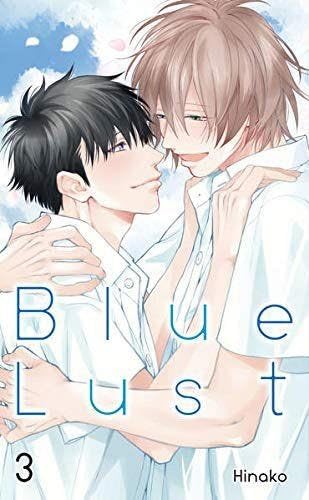
Blue Lust by Hinako

Jun. 13th, 2026 03:06 pm
reviews_and_ramblings: (Default)
[personal profile] reviews_and_ramblings
 

On a hot summer afternoon, Hayato meets the new transfer student name Souma, who has not been able to adapt to the new environment. Hayato always manages to be in Souma's sight, and thinks he will be able to take care of him. The familiar touch allows Souma to familiarize with the environment, until he's able to smile once more. All the while Hayato tries to fix things from his past.

My Rate: 8 (amzn.to/4uze1WQ)

Blue Lust by Hinako is a beautifully intense, emotionally heavy BL manga that subverts the standard "savior" romance trope. While it kicks off with a familiar premise—a popular guy helping a fragile transfer student adjust—it quickly strips away the sweet surface to expose a raw story about guilt, trauma, and what it truly means to make amends.
The story centers on Hayato, an outgoing student who notices Souma, a quiet transfer student who struggles to fit in and is carrying deep trauma from being violently bullied at his previous school for being gay. Hayato feels an overwhelming urge to protect Souma and coax him out of his shell.
However, Hinako introduces a massive twist that shifts the series from a standard romance into a high-stakes psychological drama: Hayato’s kindness isn't entirely selfless.
In middle school, Hayato outed his own best friend after a confession, leading to severe bullying and a suicide attempt. Seeing Souma struggle triggers Hayato's immense guilt, turning Souma into a chance for Hayato to "fix" his past mistakes. When Souma inevitably finds out he was initially approached out of guilt rather than genuine affection, the fragile trust they built shatters.
Hayato (The Penitent): Hayato is a rare BL protagonist because he is actively unlearning internal homophobia and coming to terms with a terrible mistake he made in his past. His journey from codependency (helping Souma to feel better about himself) to genuine love and accountability is incredibly well-written.
Souma (The Survivor): Though he looks fragile, Souma possesses a quiet resilience. The story handles his trust issues realistically. He doesn't just instantly forgive Hayato when the truth comes out; he retreats, forces boundaries, and demands honesty.
Hinako’s artwork perfectly captures the suffocating, melancholic heat of a Japanese summer. The character designs are highly expressive—Souma’s guarded, tense body language gradually shifting to a softer posture as he begins to smile is a masterclass in visual storytelling.
Spanning just three volumes, Blue Lust is tightly paced. It manages to introduce a third character from Hayato’s past to force a confrontation without making the story feel messy or overcrowded. The ending is earned, offering a realistic, hopeful conclusion where both boys learn to heal together without erasing the scars of their past.
Blue Lust is highly recommended for readers who love high-angst, high-emotion dramas with deep psychological stakes. It balances the "lust" of the genre with genuine emotional substance, making it one of Hinako's most poignant and memorable works. It is a story about how the past can bind us, but honest communication and self-reflection can set us free.

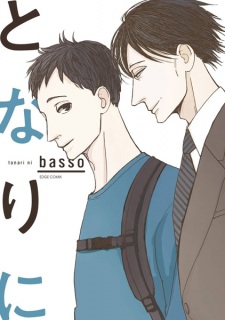
Tonari ni by Natsume Ono

Jun. 13th, 2026 02:09 pm
reviews_and_ramblings: (Default)
[personal profile] reviews_and_ramblings
 

The first time he saw him, Tohru was on his way home from his hobby of taking photos. He’s queued for the Shinkansen’s unreserved seating, just right next to him...

My Rate: 8

Natsume Ono’s BL works—which she famously publishes under her pen name basso—possess a very distinct flavor. If you are going into Tonari ni expecting the hyper-polished, high-drama, and highly idealized tropes of standard BL, it will catch you entirely off guard.
Instead, Tonari ni delivers a deeply atmospheric, quiet, and slightly melancholic slice of adult life that captures how beautifully messy human connection can be.
The premise itself feels incredibly grounded and cinematic. Tohru isn't looking for a whirlwind romance; he’s simply heading home after spending time on his hobby of photography. The catalyst for the entire story is just a moment of proximity—standing in a crowded queue for the Shinkansen's unreserved seating right next to a stranger.
That specific setting sets the tone for the entire manga. The Shinkansen queue is an inherently transitional space, a place where people are just passing through. That Ono chooses this spot for a fateful encounter highlights her mastery over building intimacy out of the completely ordinary.
At its core, Tonari ni explores a slow-burning, age-gap romance between salarymen.
What makes basso's writing so compelling here is the dialogue. When Tohru muses, "Right now, I feel like I'm having a crush like a middle schooler," it perfectly captures the terrifying vulnerability of an adult falling in love.
These are grown men with careers, routines, and emotional baggage. Their progression isn't fueled by sudden, dramatic plot twists, but rather by long conversations, shared glances, and the quiet negotiation of space.
You can’t review this manga without talking about the artwork. Natsume Ono’s style under her basso alias is utterly unique.
The character designs feature relaxed, elongated proportions, sleepy or heavy-lidded eyes, and slightly minimalist facial structures.
While some manga fans who prefer crisp, traditional bishounen styles might find it jarring at first, the art style is actually the manga's greatest asset. It feels inherently expressive, deeply moody, and carries a sort of indie-film aesthetic that matches the wistful, sometimes heavy emotional tone of the story.
Tonari ni is a masterclass in subtlety. It is an exploration of adult loneliness, unexpected comfort, and the way a chance encounter next to a train platform can completely tilt your world on its axis. If you appreciate slow-burn romances that lean into realism and unique artistic flair, it's an absolute must-read.
reviews_and_ramblings: (Default)
[personal profile] reviews_and_ramblings


Includes 2 Stories:

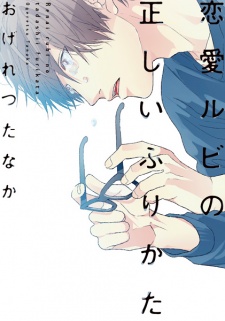
1-2) Renai-rubi no Tadashii Furikata (The Proper Way to Write Love): "I wanted to see him make this kind of face." I was a gloomy nerd in high school, and at that time I was entwined with Washizawa Natsuo – my dark past. Now, a few years later, we have reunited and Natsuo asked me out. This is my chance. We’ll go out, then I’ll break up with him, leaving him in tatters!

3.) Renai-Rubi no Yarashii Furikata (The Sexy Way to Write Love)

4-5) Hodokeru Kaibutsu (The Monster Falls Apart): "At best, you get hurt and it’s over." One of Natsuo’s friends from high school, Hayashida Kannosuke, had a drunk encounter with flashy subordinate Shuuna Ayumu, and they became fuck buddies. Long before, Hayashida hit his lover. Hayashida, with as many regrets as he has piercings, wonders if Shuuna will hold him forever?

6.) Monster Sugar: Hayashida and Shuuna are buying new camera.

Now a Japanese Drama: www.gagaoolala.com/en/videos/5607/the-proper-way-to-write-love-2025

My Rate: 8

Ogeretsu Tanaka is a master of balancing intense, often messy human emotions with high-heat romance, and this volume is a perfect showcase of that talent. Dividing the book into two distinct couples, the anthology explores how past wounds—whether from high school dynamics or personal failures—shape how we accept and give love.
Stories 1–3: The Main Feature (Natsuo & Hiroto): High school angst meets adult realization; a "revenge" plot that immediately melts into mutual pining.
Hiroto, a formerly gloomy high schooler, reunites with Natsuo—the popular guy who used to tease/bother him. When Natsuo asks him out, Hiroto hatches a plan: date him, make him fall in love, and dump him to get ultimate revenge.
Tanaka handles this beautifully. It quickly becomes clear that Natsuo’s high school behavior wasn't malicious bullying, but the classic, clumsy "I don't know how to handle my crush" acting out.
Hiroto tries so hard to be calculating and cold, but Natsuo’s genuine, soft affection completely dismantles his defenses. The transition from bitter resentment to vulnerable love feels earned, sweet, and incredibly passionate (especially by chapter 3).
Stories 4–6: The B-Side (Hayashida & Shuuna): Heavy emotional baggage, fear of intimacy, and healing through patience.
Hayashida (Natsuo’s pierced friend) carries a dark secret: he was physically abusive to a past lover. He enters a casual, physical relationship with his flashy coworker, Shuuna, but keeps his emotional distance out of fear that the "monster" inside him will hurt Shuuna, too.
This is where Tanaka’s storytelling truly shines. Instead of romanticizing or hand-waving domestic violence, the story focuses heavily on Hayashida’s intense guilt, self-loathing, and active choice to change. He doesn't think he deserves love.
Shuuna might look like a flighty, flashy younger guy, but he possesses immense emotional maturity. He sees through Hayashida’s walls and offers a safe, grounded space for Hayashida to dismantle his fears.
The domestic fluff of chapter 6 is a much-needed, heartwarming reward after the heavy emotional heavy-lifting of the previous chapters.
The Proper Way to Write Love is a fantastic BL volume that offers the best of both worlds. The first half satisfies readers looking for a lighter, slightly comedic, and deeply romantic "second chance" story. The second half delivers a poignant, mature look at guilt and redemption. It is a highly recommended read for fans who like their romance with a side of genuine emotional depth.

Shucchou Host Nyu Boy by Ryou Shinou

Jun. 13th, 2026 01:11 pm
reviews_and_ramblings: (Default)
[personal profile] reviews_and_ramblings
 

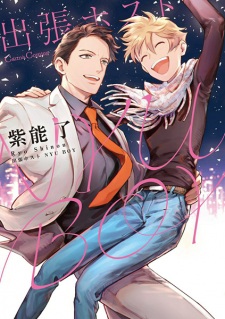
University student Naruse appears as a customer before Kei, a travel host from an Erogenous Aesthetic shop specializing in services to women. Kei offers Naruse the limited edition "Return to Origins Course," after being asked to treat Naruse as he would a girl. He can't provide an honest service to Naruse after being tricked, after all. But Naruse, who chose the service, experiences a profoundly sad memory amidst this encounter...

My Rate: 8

There is a common critique about Ryou Shinou’s work: They are fantastic at setting up incredibly vulnerable, emotionally charged premises, but the balance often tips heavily toward explicit fanservice rather than letting the romance breathe.
The setup of Shucchou Host Nyu Boy relies on layers of pretense. You have Kei, a host trained specifically to cater to women, and Naruse, a university student who uses trickery just to access this specific "Return to Origins Course."
The moment Naruse asks to be treated "as a girl," the story shifts from a standard spicy setup to something much more psychologically complex.
Kei’s initial reaction—offering a harsher, less "honest" service because he feels tricked—creates an intense, high-friction dynamic.
Instead of this just being a standard power-dynamic trope, the story reveals Naruse’s deeply sad memory. The explicit scenes are meant to contrast with this profound sadness, but as you mentioned, the sheer volume and detail of the smut can drown out that emotional resonance.
When a manga introduces heavy emotional baggage (like Naruse's past), the explicit scenes need to serve the emotional arc.
Instead, the manga often feels like it's trying to fulfill two different mandates: Being a highly detailed, explicit BL title. Being a tender story about two wounded people finding solace in each other.
Because the sex is so hyper-detailed, it occasionally robs the narrative of its tenderness. You're pulled out of Naruse's emotional headspace and thrust into standard, prolonged erotica choreography.
When Kei try to protect Naruse from the strangers, this is exactly where the manga shines and proves your point—the story could have used so much more of this.
The shift in Kei after their first night together is where the real romance lies. When he steps up to shield Naruse from the judgmental eyes and gossip of strangers, it completely reframes his character. It shows that despite the rough, resentful start, Kei possesses a genuine, protective tenderness.
This scene provides the exact romanticism I was craving: It proves Kei sees Naruse as someone worthy of protection, not just a client who tricked him. It grounds the relationship in the real world, showing they have to navigate external perceptions together. It offers a soft, comforting contrast to the intense, overwhelming nature of their first encounter.
Shucchou Host Nyu Boy is a compelling read if you go into it expecting heavy explicit content, but it leaves you wishing the author had trusted the emotional plotline a bit more. The transition from spiteful service to genuine, protective care shows that Ryou Shinou knows how to write a deeply moving romance—they just chose to let the spice take center stage this time.
If you love the protective, "healing from a sad past" dynamic but want something where the romance takes the driver's seat over the explicit details, you might enjoy authors like Meguru Hinohara or Shoko Hidaka, who tend to balance high-stakes emotional intimacy with beautifully paced romanticism.

Living With Him by Toworu Miyata

Jun. 13th, 2026 12:38 pm
reviews_and_ramblings: (Default)
[personal profile] reviews_and_ramblings
 

Ryota Natsukawa is starting university and he suddenly finds out that his roommate is going to be his childhood friend, Kazuhito Tanaka. Despite Kazuhito's picture-perfect looks, he doesn't have a girlfriend. Ryota is curious about why this is and attempts to point out his faults from a girlfriend's point of view. However, as Ryota gets to know more about Kazuhito, their relationship changes. Will they just remain friends? Or will their relationship blossom into something more?

Also, be sure not to miss out on the bonus story, Living With Him: Heating Up, where you can find out what happens later on!

Now a Japanese Drama: www.gagaoolala.com/en/videos/4452/living-with-him-2024

My Rate: 8 (amzn.to/4v3hNIU)

If you are tired of the intense, high-drama, or sometimes toxic tropes that pop up in a lot of BL manga, Living With Him by Toworu Miyata is going to feel like a breath of fresh, cozy air.
Originally published as the author's debut work, this single-volume manga manages to take the classic "childhood friends to roommates to lovers" setup and turn it into peak wholesome content. 
Toworu Miyata’s artwork perfectly mirrors the story's overall tone. It features very clean, expressive lines and avoids over-the-top, dramatic character designs. The focus is heavily on subtle shifts in facial expressions—which is crucial because the romance builds on quiet moments in their shared apartment.
This story is completely devoid of heavy angst, external manipulation, or dark themes. It's the ultimate comfort read—warm, gentle, and incredibly sweet.
Kazuhito is an absolute cinnamon roll. Even though he has harbored feelings for Ryota since childhood, he never pushes those boundaries or makes his roommate feel cornered. He explicitly waits for Ryota's comfort and consent at every single milestone, which is incredibly refreshing for the genre.
The story gracefully steers clear of frustrating clichés like "I'm straight except for you specifically." Ryota's evolving feelings are handled organically as he learns more about who Kazuhito is as an adult, rather than getting bogged down by a rigid crisis over labels.
If you are looking for a story with massive twists and turns, you won't find them here. From the moment they move in together, the trajectory of their "will-they-won't-they" dynamic is very clear. It trades narrative surprise for execution and atmosphere.
The focus stays so tight on Ryota and Kazuhito that the supporting cast doesn't get much room to breathe. They mostly exist to give a little nudge to the main couple or to stand in as standard "pot-stirring" friends.
Living With Him is a beautifully straightforward, beginner-friendly BL manga. It is short, incredibly sweet, and masterfully executes the domestic comfort of a healthy relationship. If you end up loving it, don't miss the 44-page bonus sequel, Living With Him: Heating Up, which gives a glimpse into their lives once they are officially dating!

False Memories by Isaku Natsume

Jun. 13th, 2026 12:31 pm
reviews_and_ramblings: (Default)
[personal profile] reviews_and_ramblings
 

The latest series from the author of fan favorite Devil’s Honey.

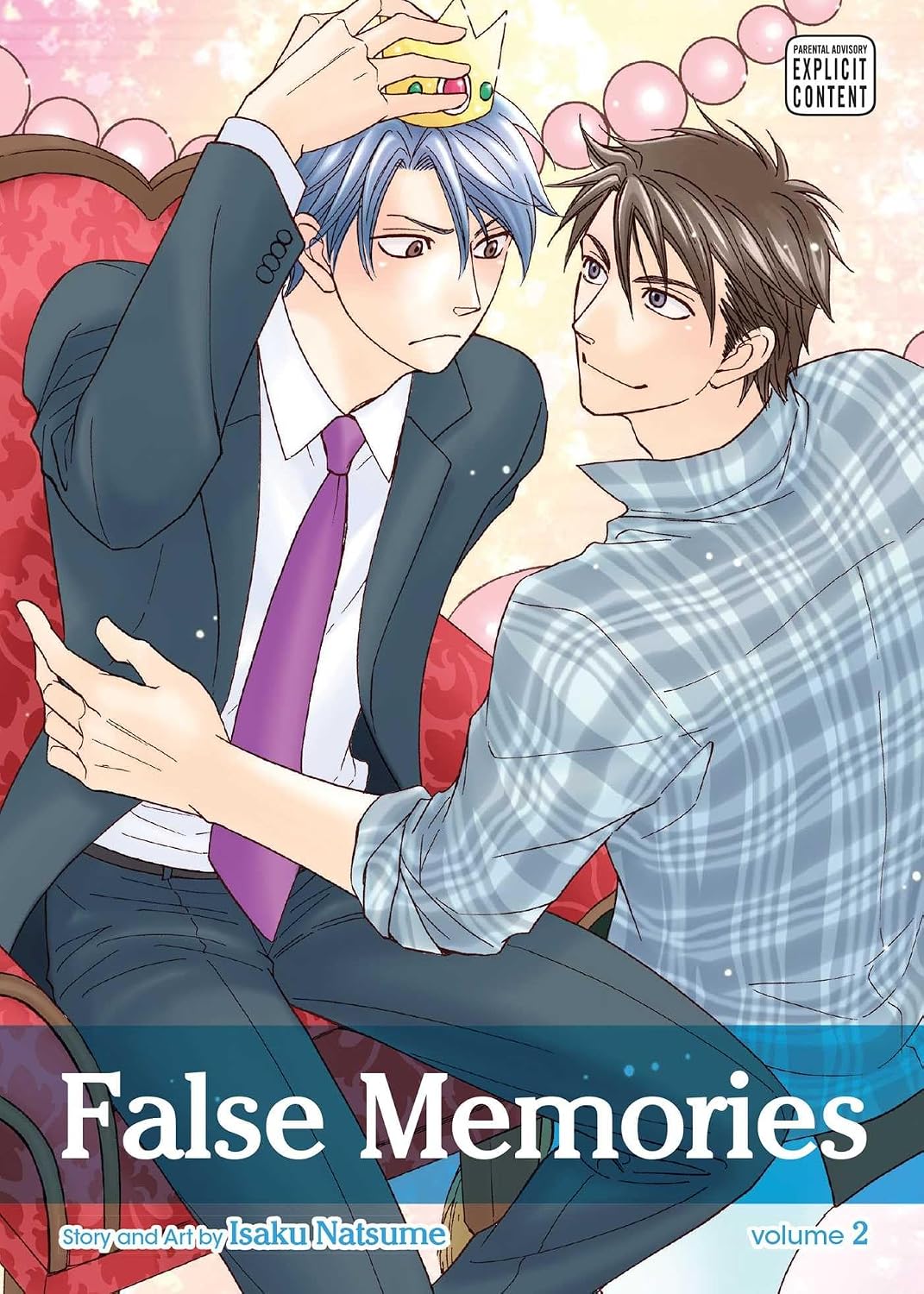
Although they were best friends in high school, Nakano and Tsuda haven't talked in ten years. Which may have a little something to do with the fact that not only were they more than best friends, but also that Tsuda broke Nakano's heart, leaving him to pick up the pieces. Now that they’ve been thrown back together thanks to a work project, Nakano is determined to put the past behind him, and both men decide to keep their relationship strictly professional. The question is, can they?

My Rate: 8 (amzn.to/4vJBw09)

Isaku Natsume is a staple in the BL world for a reason. If you loved Devil’s Honey or Candy Color Paradox, False Memories delivers exactly what she does best: incredibly charming, slightly stubborn men navigating high-friction workplace tension mixed with deep-seated affection.
False Memories is a textbook example of the second-chance romance and co-workers reunited tropes. It skips unnecessary grimness and instead focuses on the realistic, slightly messy awkwardness of trying to be "just professionals" with someone who completely upended your teenage life.
Nakano is determined to hold up a defensive wall, while Tsuda—who broke Nakano's heart in high school—isn't malicious; he was just young, confused, and prone to making bad choices. Watching them constantly misread each other's signals keeps the pages turning.
Having them forced together by a professional project acts as the perfect pressure cooker. They can't run away from their history because they have deadlines to meet.
Tsuda’s coworker Saeki enters the mix in Volume 2 and acts as a brilliant catalyst. By intentionally stirring the pot and making Tsuda jealous, he forces the two main characters to stop tip-toeing around their feelings and actually communicate.
Because the series is only two volumes long, the resolution to a decade-long estrangement happens relatively quickly. If you prefer slow-burn stories that spend volumes unpacking past trauma, the quick shift from "strictly professional" to "tearing through town to find you" might feel a bit rushed.
If you want a comforting, beautifully drawn BL with a healthy balance of angst, workplace tension, and an incredibly satisfying happy ending, False Memories is a great weekend read. It highlights why Isaku Natsume remains a fan favorite.
reviews_and_ramblings: (Default)
[personal profile] reviews_and_ramblings
 

An all-new boys love by the creator of Dekoboko Sugar Days

Enoki is practically the poster-boy for what a typical nerd looks like: short and slight, complete with big round glasses and social awkwardness. His main hobby is making video games, and he's used to not having many friends at school. Then, he meets Shirataki, a former member of the baseball club and his exact opposite; tall, muscular and sporty. Despite their many differences, the spark of friendship between the two boys begins to grow into something more...

My Rate: 8 (amzn.to/3QENKIz)

If you love the classic "opposites attract" trope wrapped in a cozy, slow-burn package, This Wonderful Season With You by Atsuko Yusen is a single-volume Boys' Love (BL) manga that delivers plenty of charm—even if it relies heavily on established genre conventions.
Written by the creator of the popular Dekoboko Sugar Days, this standalone story hits all the familiar beats of a high school slice-of-life romance but elevates them with expressive art and an endearing dynamic between its main pair.
The narrative kicks off when Enoki and his classmates in the Electric Engineering (Computer) Club are desperately trying to recruit a new member to keep their club officially recognized by the school. Enter Shirataki, a tall, athletic first-year who has recently dropped out of the baseball club due to an injury and is currently drifting through a cloud of sports-induced ennui.
On a total whim, Shirataki joins the club. While he doesn't care about coding or building video games, he finds himself deeply fascinated by Enoki's relentless, pure-hearted passion.
Visually, Atsuko Yusen nails the character designs. Enoki is small, wide-eyed, and slightly clumsy, while Shirataki is towering and heavily built. If you enjoy distinct visual contrasts in your leads, their physical dynamic is highly satisfying.
Shirataki initially comes across as aloof, blunt, and slightly cynical. However, watching him slowly open up, deal with his complicated feelings about leaving baseball, and actively take the first step to pursue Enoki is incredibly rewarding. Enoki’s "weak but spunky" attitude gives him a nice backbone.
Yusen's art style is clean, expressive, and highly capable of capturing both the quiet, tender slice-of-life moments and the more comical, embarrassed reactions of teenagers realizing they are falling in love.
While it's a solid, feel-good read, it isn't trying to reinvent the wheel.
The manga leans hard into traditional anime tropes. The "computer club" members are depicted as ultra-nerds who call outsiders "normies," and the narrative occasionally flirts with the cliché "you look much sexier when you take off your glasses" trope.
Because it's a single-volume story trying to balance a slow-burn friendship with a mature BL payoff, the final transition from pining friends to physical intimacy feels a bit abrupt. The story goes from G-rated hand-holding to explicit 18+ content quite rapidly in the final stretch.
This Wonderful Season With You doesn't break new ground in the BL genre, but it is a beautifully drawn, genuinely heartwarming comfort read. If you want a quick, sweet, jock-meets-nerd story to breeze through in one sitting, this one is an incredibly cozy choice.

Koi ni mo Naranai by hagi

Jun. 13th, 2026 10:16 am
reviews_and_ramblings: (Default)
[personal profile] reviews_and_ramblings
 

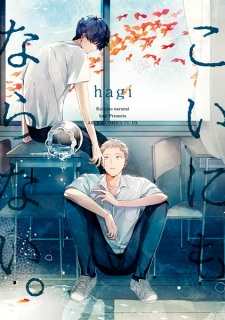
Surprised to see the calm and collected Yuuya Koga crying, high school student Souta Tajima accidentally drops a bucket of water on him. Concerned, Tajima apologizes to Koga, who reveals he is crying over the death of his special goldfish—the one he got from the person he likes. He claims that a fat white cat with black patches killed his pet, which fits the description of Tajima's cat, though Tajima feigns ignorance.

Koga sees through Tajima's lie but sees it as an opportunity to reveal a shocking secret of his own. Tajima gradually becomes an irreplaceable figure in his life as Koga begins to rely on him for emotional support and the boys grow ever closer.

My Rate: 8

Koi ni mo Naranai (which roughly translates to This Can’t Even Be Called Love) by Hagi is a beautifully tender, slice-of-life Boys' Love manga that masterfully handles the "accidental connection" trope. What starts as a comedic, slightly absurd incident—a dropped bucket of water and a "murderous" fat cat—quickly evolves into a deeply emotional and grounded character study.
Hagi is known for creating stories with immense emotional depth, and this volume is no exception. It perfectly balances the awkwardness of youth with genuine, heavy emotional baggage.
The premise sets up what could easily be a standard slapstick comedy, but Hagi subverts expectations almost immediately.
Souta Tajima’s cat being the prime suspect in the tragic demise of Yuuya Koga’s goldfish forces a forced proximity that feels both organic and delightfully tense. Tajima’s guilt makes him vulnerable, while Koga’s grief makes him receptive.
When Koga reveals his "shocking secret," it shifts the narrative from a simple high school romance into a story about vulnerability, hidden pain, and the masks we wear.
The story unfolds at a gentle, deliberate pace. It doesn't rush the romance; instead, it focuses on the shift from obligation (Tajima making up for his cat's crime) to genuine emotional dependency.
The heart of this manga lies in the contrast between its two leads.
Souta Tajima: Earnest, a bit clumsy, and fiercely protective. He acts as the grounding force in the relationship, stepping up to be the emotional anchor Koga desperately needs.
Yuuya Koga: Calm, collected, and envied on the outside, but deeply fragile on the inside. His attachment to the goldfish symbolizes his desperate grasp on a unrequited or painful love.
The transition from Koga being an unapproachable, perfect student to someone who can unravel completely in front of Tajima is incredibly satisfying. Tajima doesn't judge Koga's intensity; instead, he opens up a safe space for him.
Hagi’s art style is clean, expressive, and perfectly suited for a character-driven drama.
The panels focusing on Koga’s tears and Tajima’s wide-eyed panic carry immense weight.
The "fat white cat with black patches" adds a touch of lighthearted visual comedy that keeps the manga from feeling too melancholic.
The layout often emphasizes quiet moments—a shared look, a hesitant touch, or the distance between the two boys as they walk home—building a palpable romantic tension.
Koi ni mo Naranai is a must-read for fans of slow-burn, emotional BL. It avoids cheap melodrama and instead focuses on how healing it is to be truly seen by another person. It’s sweet, slightly bittersweet, and ultimately incredibly heartwarming.

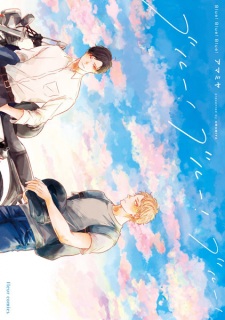
Blue! Blue! Blue! by Amamiya

Jun. 13th, 2026 09:50 am
reviews_and_ramblings: (Default)
[personal profile] reviews_and_ramblings
 

When Kippei Takiya, the brother of two older sisters, realizes that he desperately needs money to buy a birthday present for his lover, he decides to live and work onsite at a ryokan (a traditional Japanese inn). There, he meets the well-educated Masumi Honjou, a man who is neither too strict nor too lenient, and who has a charm which embodies the word "mature." As Takiya continues working at the ryokan, he starts to become interested in Honjou...

My Rate: 8

Blue! Blue! Blue! by Amamiya is a classic example of a single-volume, slow-burn BL manga that leans heavily into atmosphere, workplace setting, and character nuance rather than high-stakes drama or instant gratification.
It's a gentle, grounded romance with a distinct age-gap / maturity contrast dynamic.
Amamiya’s art style is clean, elegant, and relies beautifully on expressive character work rather than dense, overwhelming screen tones.
The traditional Japanese inn setting isn't just an excuse for the plot; it grounds the story. The author spends time illustrating the quiet, laborious nature of hospitality work, which slows down the pacing of the narrative in a very deliberate, atmospheric way.
There is a stark visual contrast between Kippei’s youthful, energetic, and slightly chaotic aura and Honjou’s relaxed, smoking, motorcycle-riding "cool adult" demeanor.
Kippei Takiya’s background of being raised by older sisters plays a massive role in his personality. He is highly perceptive of women, slightly rebellious, but deeply unaccustomed to interacting with an older, self-assured male authority figure. When he runs away to work at the ryokan (initially driven by the superficial need to buy a lavish gift for his then-partner), his worldview is narrow.
The heart of the manga is Kippei's growing fascination with Masumi Honjou. Honjou is the embodiment of a relaxed, emotionally grounded adult. He isn't overly strict with Kippei, nor is he a soft touch.
What makes the dynamic interesting is that Honjou doesn't immediately cave to Kippei's youthful energy or blunt interest. He sets gentle but firm boundaries, acting as a calm "muro" (wall) that Kippei keeps running into.
Honjou isn't perfect; he carries his own quiet melancholies, including a lingering, unrequited attachment to a straight high school friend. This keeps him from feeling like a flawless, idealized "prince" archetype and makes him feel like a real person.
What works: The progression from workplace curiosity to genuine emotional and physical attraction feels earned, even within a single volume. It reads like a quiet, reflective slice-of-life. It captures the heavy, humid feeling of summer work and late-night conversations. Kippei grows up significantly during his time at the ryokan. His interest in Honjou evolves from simple intrigue into a complex mix of wanting to be protected by, and wanting to protect, this mature man.
What might miss the mark: Because it is a single-volume manga, the ending can feel abrupt to readers who want a long, drawn-out domestic epilogue. The romance relies heavily on quiet glances, subtext, and wordless panel transitions. If you prefer high-intensity melodrama, explicit pacing, or instant-coupling BL, this might feel a bit too "meh" or slow.
Blue! Blue! Blue! is a lovely, low-key palette cleanser of a manga. It doesn't reinvent the wheel of the "younger energetic guy x mature older guy" trope, but it treats its characters with a tenderness and realism that makes it a incredibly comforting read.

reviews_and_ramblings: (Default)
[personal profile] reviews_and_ramblings


A collection of stories:
Nemuri Otoko to Koi Otoko (A Sleeping Man and a Loving Man): Jude and Royce have been long-term business partners and housemates. Things were going well for the platonic life partners, one of whom is openly gay while the other is straight; that is until a mysterious sleeping disease befalls Royce... Royce's condition responds to medication, but he hasn't been taking it lately. Seeing Jude chatting with another man, he suddenly wonders if Jude might have a lover.
Yasashii Dinner (Sweet Dinner): Chef Kirino reconditions Aoi-kun, whose issues with food began during a previous relationship.
Yoru o Nigeru (Run from the Night): Afraid of the dark and afraid of attachments, Haru has emotional scars from childhood trauma. When his relationship with Hugo starts to turn into something more than just sex, Haru is conflicted.
Taiyou to Himitsu (Sun and Secrets/Secret and Sun): Kaito has an intense affair with Cody one summer, and feels betrayed when Cody suddenly announces he's returning to his family. But now Cody is back, and wants to pick up where they left off.
Matsu Hana (A Waiting Flower): "A sacred place, a forbidden deed. Such a thing, though I understand that it is not allowed."
Nemuri Otoko to Koi Otoko - Sono Ato (A Sleeping Man and A Loving Man - Epilogue): Royce goes out of town on his own, forgetting something important.

My Rate: 8

Ranmaru Zaria is well-known in the BL manga world for delivering high-emotion, beautifully illustrated stories that balance angst with deep, comforting intimacy. A Sleeping Man and a Loving Man is a stellar example of her ability to weave complex emotional baggage into satisfying romantic resolutions.
Rather than focusing on a single narrative, this anthology delivers a spectrum of love stories—ranging from slow-burn domestic angst to healing from trauma, and even a touch of historical forbidden romance.
1. A Sleeping Man and a Loving Man: Domestic, slow-burn angst, "straight" vs. gay best friends. This title story anchors the collection beautifully. The dynamic between Jude and Royce is built on years of established intimacy, which makes the shift in their relationship feel earned rather than abrupt. Royce’s "sleeping disease" serves as a poignant physical manifestation of his emotional avoidance and unspoken jealousy. The epilogue provides a sweet, grounded conclusion to their newly shifted reality.
2. Sweet Dinner: Healing, culinary romance, recovery. A incredibly tender story. Zaria tackles the psychological impact of a toxic past relationship through Aoi’s aversion to food. Chef Kirino acts as a grounding force, using cooking as a love language to gently recondition Aoi. It’s a comforting, low-stakes read that feels like a warm hug.
3. Run from the Night: Hurt/comfort, childhood trauma, vulnerability. This is perhaps the heaviest story in the collection. Haru’s fear of the dark and aversion to emotional attachment are deeply rooted, making his physical relationship with Hugo a battleground between self-preservation and the desire to be loved. Hugo's patience is the highlight here, turning a potentially volatile dynamic into a beautiful journey of trust.
4. Sun and Secrets: Summer romance, second chances, lingering resentment. A classic "the one that got away" trope with a twist. The tension between Kaito and Cody is palpable, fueled by past betrayal and enduring attraction. Zaria captures the fleeting, intense atmosphere of a summer fling that refuses to stay in the past. It's passionate, a bit messy, and highly engaging.
5. A Waiting Flower: Historical, taboo, melancholic. A brief but striking departure from the contemporary settings of the other stories. It leans heavily into atmosphere and the bittersweet nature of forbidden desire. While short, it showcases Zaria’s versatility in capturing different eras and tones.
What sets this anthology apart is how the characters handle their baggage. Even when they are conflicted or hurting, there is an underlying maturity to how the conflicts are resolved. Communication (or the hard work of learning to communicate) is central to every happy ending.
Ranmaru Zaria’s art is, as always, exceptional. Her character designs are expressive, and she excels at drawing subtle shifts in facial expressions—a glance, a downturned mouth, or a heavy eyelid—which is crucial for stories that rely so heavily on unspoken feelings.
For a short-story collection, each narrative feels surprisingly well-paced. Zaria efficiently establishes the history between characters so that the emotional payoffs land effectively despite the limited page count.
A Sleeping Man and a Loving Man is a must-read for fans of character-driven, emotionally resonant BL. It avoids shallow tropes in favor of exploring how flaws, trauma, and history shape the way we love. Whether you are looking for domestic comfort or angsty second chances, this collection has a story that will stick with you.

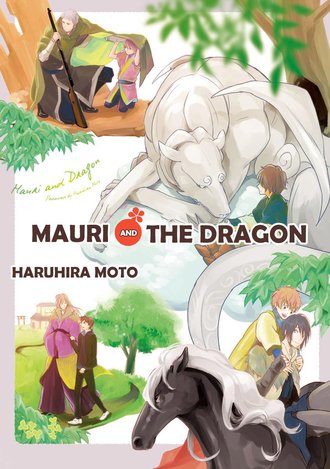
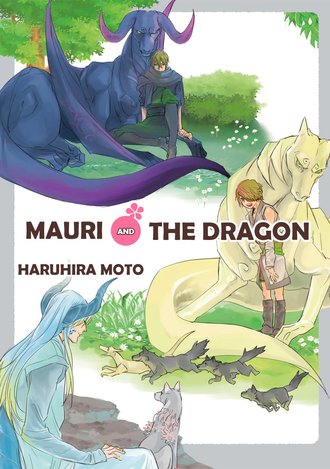
Mauri and Dragon by Haruhira Moto

Jun. 13th, 2026 08:06 am
reviews_and_ramblings: (Default)
[personal profile] reviews_and_ramblings
 

It was a time of prosperity, and mighty gods wandered the lands... When one such deity, a dragon passes by a village, a young boy named Mauri is offered up as sacrifice. However, captivated by the boy's bravery and endearing nature, the god vows to keep the boy... and his tempting body all to himself! A compilation of comedic, heart-warming tales featuring gods that find themselves drawn to love, and the humans and wondrous creatures they meet along the way.

My Rate: 8 (mangaplaza.com/title/0303005399/)

Mauri and Dragon by Haruhira Moto is a beautifully soft, folklore-infused BL manga that perfectly balances mythical grandeur with cozy, slice-of-life intimacy. While the initial premise of a human sacrifice might hint at darker, high-stakes angst, the series quickly subverts expectations to deliver something deeply heartwarming, comforting, and thoroughly comedic.
One of the most charming elements of Haruhira Moto’s worldbuilding is the specific lore surrounding the deities. In this universe, wandering gods roam the lands, but they are fundamentally detached from human form. It is only when a god genuinely falls in love with a mortal that their devotion allows—and drives—them to take on a human-like shape to stand beside their lover.
This mechanism serves as a beautiful metaphor for the transformative nature of love throughout the series. The central relationship between Mauri and his Dragon God shifts rapidly from a terrifying dynamic (a village sacrifice) to an incredibly domestic, fiercely protective partnership.
While the title spotlights Mauri and his dragon, the series operates as an episodic compilation. It weaves between the main couple's continuing life—which eventually expands to include a chaotic, lovable "little one"—and separate, self-contained side stories.
These vignettes introduce a rich tapestry of other eccentric entities, including: An enigmatic, fussy cat god. A loyal winged canine creature. A poignant, cyclical tale of a hunter and a seasonal bird deity (Tokoharu no Kariudo). The arrival of a troublesome black dragon from the main god's past that forces Mauri to act as the level-headed mediator.
Because it shifts perspective, the pacing never feels stagnant, though readers completely invested in only the main couple might find themselves wishing for a bit more linear focus on Mauri and his dragon.
Haruhira Moto's art style grounds the story perfectly. The character designs beautifully contrast the massive, intimidating scales and ethereal presence of the raw beast-gods with soft, highly expressive human features. The comedic facial expressions provide excellent comic relief, undercutting the heavy lore so the tone stays light and fluffy.
Despite the initial synopsis mentioning Mauri's "tempting body," the series leans far more heavily into cozy fluff, emotional sincerity, and playful comedy than intense, high-drama smut. It carries a comfortable 16+ rating, prioritizing the domestic bonding and the hilarious daily struggles of a literal god trying to understand human nuances.
If you are looking for a gentle, comforting fantasy escape filled with protective non-human entities, domestic bliss, and absolute devotion, Mauri and Dragon is a stellar addition to your reading list. It feels like a warm cup of tea on a rainy afternoon.

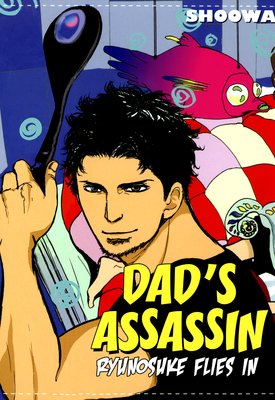
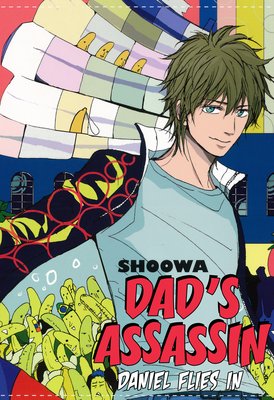
Dad's Assassin by SHOOWA

Jun. 13th, 2026 07:56 am
reviews_and_ramblings: (Default)
[personal profile] reviews_and_ramblings
 

Ryunosuke's a high school student living with his father, Daniel, who's popular with all the ladies. Ryunosuke doesn't know it, but 14 years ago, Daniel was asked to take care of him by a particular woman. Ryunosuke has a few caring friends and he spends his days filled with fun and happiness. But, he also has a secret that he can't reveal to Daniel...!!

My Rate: 8 (www.ebookrenta.com/renta/sc/frm/item/141712)

Dad’s Assassin by SHOOWA is a unique, BL manga that walks a razor-thin line between lighthearted slice-of-life comedy, heavy psychological undercurrents, and unconventional romance.
If you are looking for a completely textbook, sugary-sweet fluff piece, this isn't it. But if you appreciate SHOOWA’s signature style—gritty, expressive art, complex dynamics, and a distinct lack of censorship regarding raw human emotion—it’s an incredibly compelling read.
The synopsis hints at a hidden past, but the real core of the story is the friction between Ryunosuke’s domestic daily life and the massive elephant in the room. Ryunosuke is intensely, unapologetically in love with Daniel—the charismatic, womanizing man who raised him.
Because Daniel is not his biological father (having taken him in as an infant 14 years prior under mysterious circumstances), the manga positions them in a complex strangers-to-family-to-lovers trajectory. Ryunosuke's "secret" is a mixture of his unrequited romantic feelings and the slowly unraveling truth of Daniel’s past as an assassin.
SHOOWA is well-known in the BL community for avoiding the hyper-polished, cookie-cutter "pretty boy" art style. Instead, the art is:
Heavy line work and deeply expressive facial features that perfectly capture tension, longing, and comedic timing.
The action and domestic scenes flow with a distinct grit that grounds the otherwise outlandish premise (a retired assassin playing single dad).
To help you decide if it fits your specific reading preferences, it's best to look at what the manga does well and where it might challenge certain readers:
Subverting the "Taboo": Because they are not blood-related and Daniel is acutely aware of the adoption timeline, the story focuses more on emotional dependency, guilt, and the shift from guardian to partner than simple shock value.
Age Gap & Pseudo-Incest: The guardian-and-ward dynamic is the central pillar of the romance. If age gaps or pseudo-incestuous tropes make you uncomfortable, the premise will be a tough sell.
The Comedy-Drama Balance: One minute Ryunosuke is hanging out with his high school friends in standard slice-of-life fashion, and the next, the narrative shifts into Daniel's dark, violent background.
Pacing: Spanning across three volumes (Daniel Flies In, Ryunosuke Flies In, and Flying In Together), the plot can sometimes feel like it jumps rapidly between domestic fluff and sudden serious drama.
Read it if you love complex, psychological BL, older-seme/younger-uke dynamics, and authors who aren't afraid to make their characters beautifully flawed. SHOOWA’s character writing is excellent at making bizarre situations feel emotionally realistic and poignant. If you prefer traditional, straightforward romance setups, or if you find the transition from a parental figure to a romantic partner fundamentally unappeable, this is not for you.
Ultimately, Dad's Assassin treats its wild premise with a surprising amount of emotional gravity, making it a memorable, slightly dark hidden gem in the world of independent BL manga.

(no subject)

Jun. 12th, 2026 11:30 pm
flemmings: (Default)
[personal profile] flemmings
Today was indeed much drier than the rest of this week has been, but I only discovered that when I went out on the porch to meet the UberEats guy. Naturally I'd meant to go to Sushi On Bloor, but one of our flying squadrons did a sonic-booming flyby just as I'd intended to leave, in honour of the soccer match playing down wherever it was. And since I didn't know whether it would be air show boom boom boom for a half hour or not, I ordered in.  In the event it was only the one, but still. Safe than sorry.
 
The traffic was probably still impossible an hour later because my courier apologized for keeping me waiting. Maybe he's one of the few delivery cyclists who drives in the street and not in Bloor's bike lanes, or maybe he had other deliveries, because no one in their right mind would use the traffic lanes on Bloor on a Friday if he had the option of the still crowded but moving bike lanes. But he's also one of the couriers who is overcome by a reasonable tip-- thanks me in person and then messages to thank me again. There are a million delivery guys downtown but there's always a chance that they might remember me and grab my order the next time, like the friendly taxi driver who always picks me up from the dentist.

And we tied the match with Bosnia-Herzegovina. I had to tell my Korean physiotherapist about Bosnia-Herzegovina because the name was unfamiliar to her. Not that I know much myself. The name always has Saki/ pre-WW1 vibes to me.

On Shooting Movies

Jun. 13th, 2026 12:30 am
bryant: (Default)
[personal profile] bryant

I recently watched Gus Van Sant’s Elephant, and respected it very much. Inevitably, I wound up comparing it to the other auteur school shooting movie based on an actual shooting, Denis Villeneuve’s Polytechnique, which in my eyes is the best thing Villeneuve has ever done. The two movies are on par in terms of craft; my gut reaction is that Polytechnique is a wiser movie. So I wanted to think about why I reacted that way.


Full post: https://popone.innocence.com/archives/2026/06/12/on-shooting-movies/

March 2025

S M T W T F S
      1
2345678
910 1112131415
16171819202122
23242526272829
3031     

Most Popular Tags

Style Credit

Expand Cut Tags

No cut tags
Page generated Jun. 14th, 2026 09:15 am
Powered by Dreamwidth Studios